Most suppliers show you a product photo and a spec table. We thought it was worth showing you what actually happens before the shelter leaves the factory.
This video walks through the full packaging process for one of our container dome shelters — from laying out the steel frame components to sealing the crate for shipment to our Melbourne warehouse.
A container dome shelter kit isn't a single piece of equipment. It's a complete structural system — steel arches, purlins, base rails, lock-clamps, PVC cover, bolts, ropes, ratchets, installation hardware, and a detailed manual — all packed into one crate.
When that crate arrives on your site, everything you need to build the shelter should be in there. Nothing missing, nothing damaged, nothing mislabelled.
That's the job of the packaging process. And it's not as simple as throwing parts into a box.
Step 1 — Steel Frame Components Are Loaded Against a Parts List
Every kit starts with the structural steel. Workers lay out the hot-dip galvanised frame components — arches, longitudinal purlins, diagonal braces, and base rails — and load them into the steel crate in sequence, cross-checked against a detailed parts list.
The sequence isn't random. Longer components go in first. Smaller sections are stacked to minimise movement during freight. Every piece is accounted for before the crate moves to the next stage.
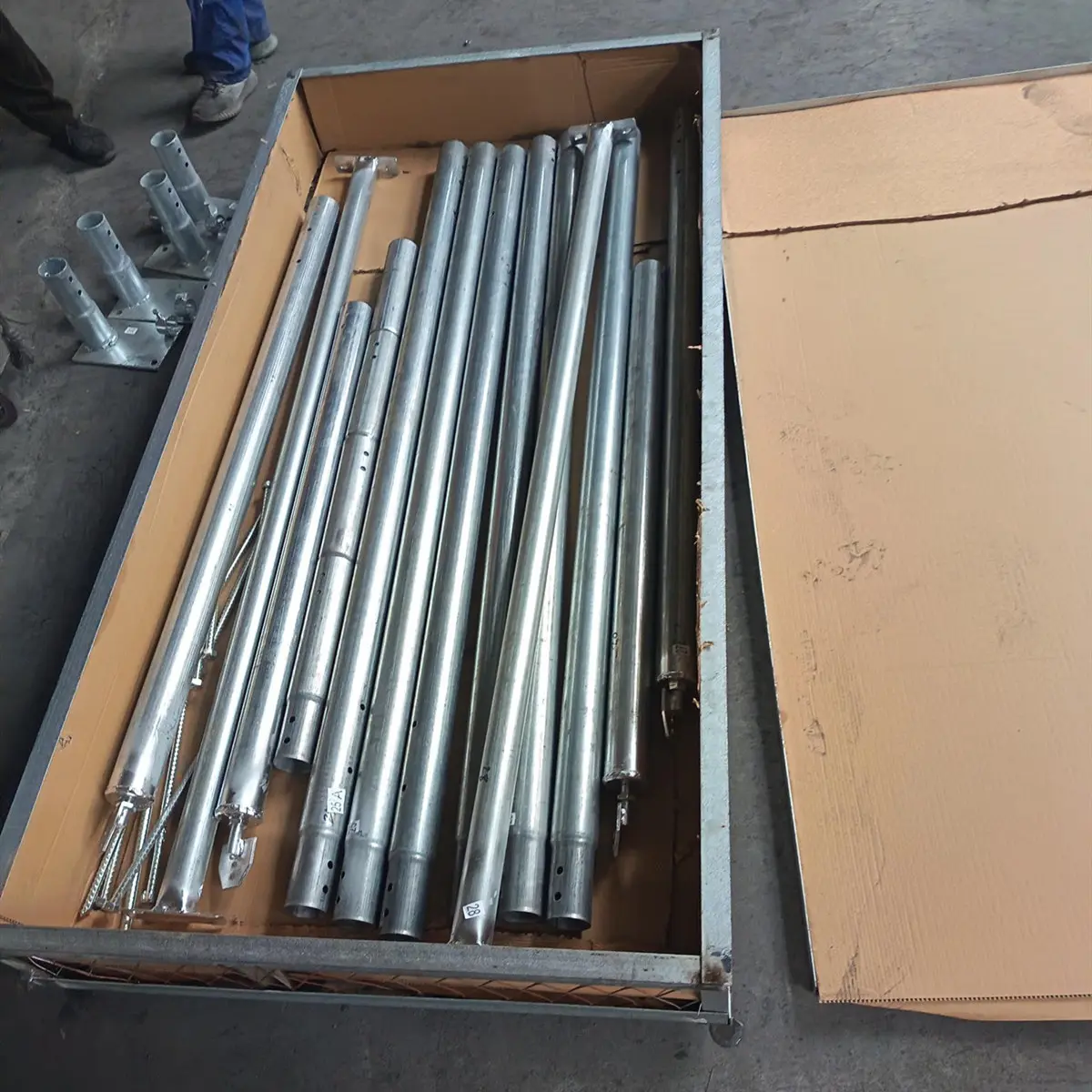
Step 2 — Lock-Clamp System and Base Hardware
Once the structural steel is in, the Lock-Clamp mounting components go in next. These are the parts that secure the shelter base rail to your shipping containers — no welding, no drilling, no permanent modification to the container.
Base plates and structural connection hardware are packed separately and clearly positioned in the crate so they're easy to locate during assembly.
Step 3 — Bolts, Ropes, Ratchets, and Installation Accessories
This is the step most buyers never think about until something is missing on site.
Every bolt, rope, ratchet strap, and installation accessory is individually packed and labelled before it goes into the crate. Grade 8.8 high-tensile bolts are bagged by type. Ratchets and straps for tensioning the PVC cover are packed together. Two spanner kits are included with every order.
Nothing is loose. Nothing is unlabelled. If it's on the parts list, it's in the crate.
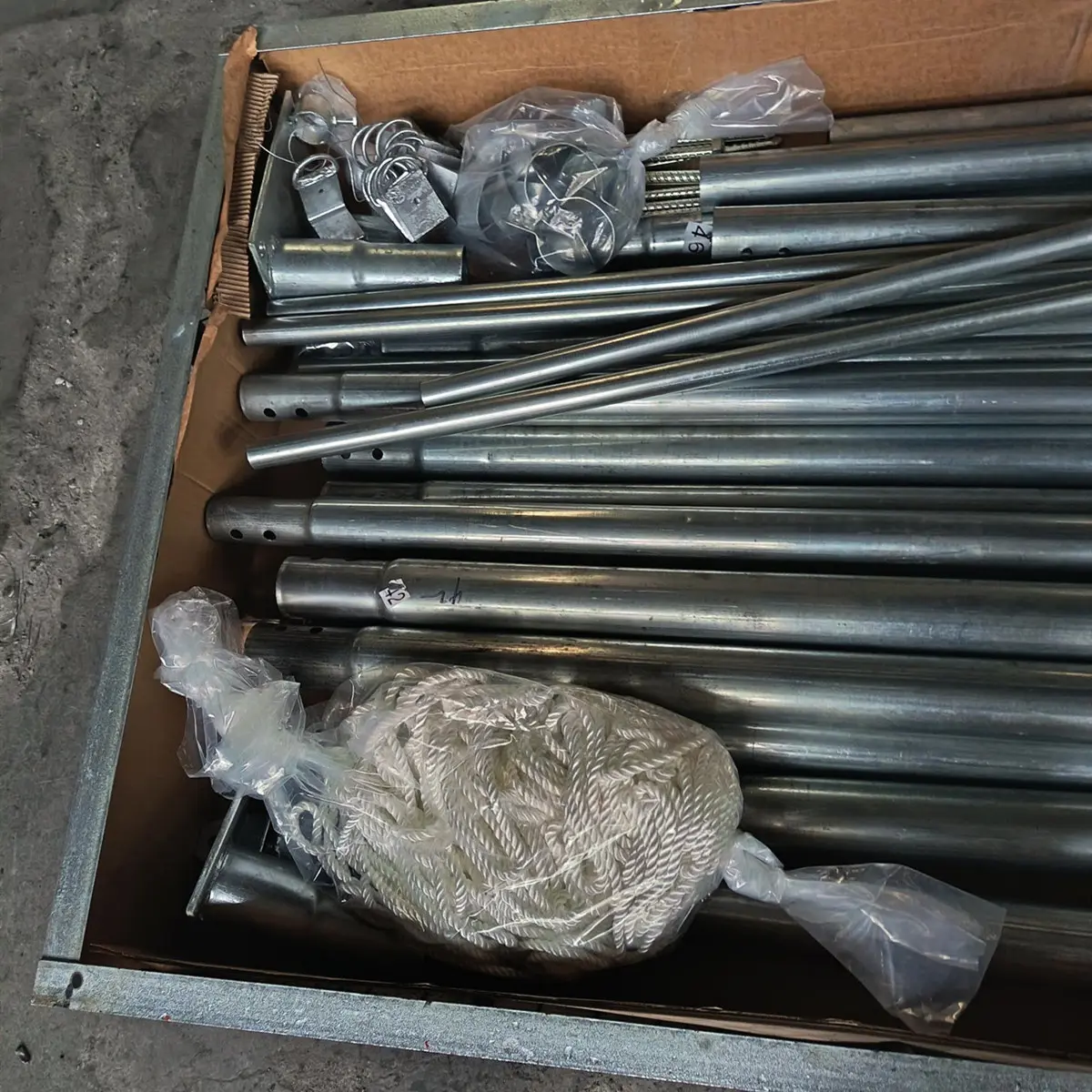
Step 4 — Final Crate Check and Seal
Before the crate is sealed, a final check runs through the parts list one more time. The completed crate is photographed, weighed, and cleared for shipment.
For instance our 10-metre TS1006, that crate ships at 765kg — around 150–250kg heavier than comparable budget alternatives on the market. That weight difference isn't packaging. It's steel.
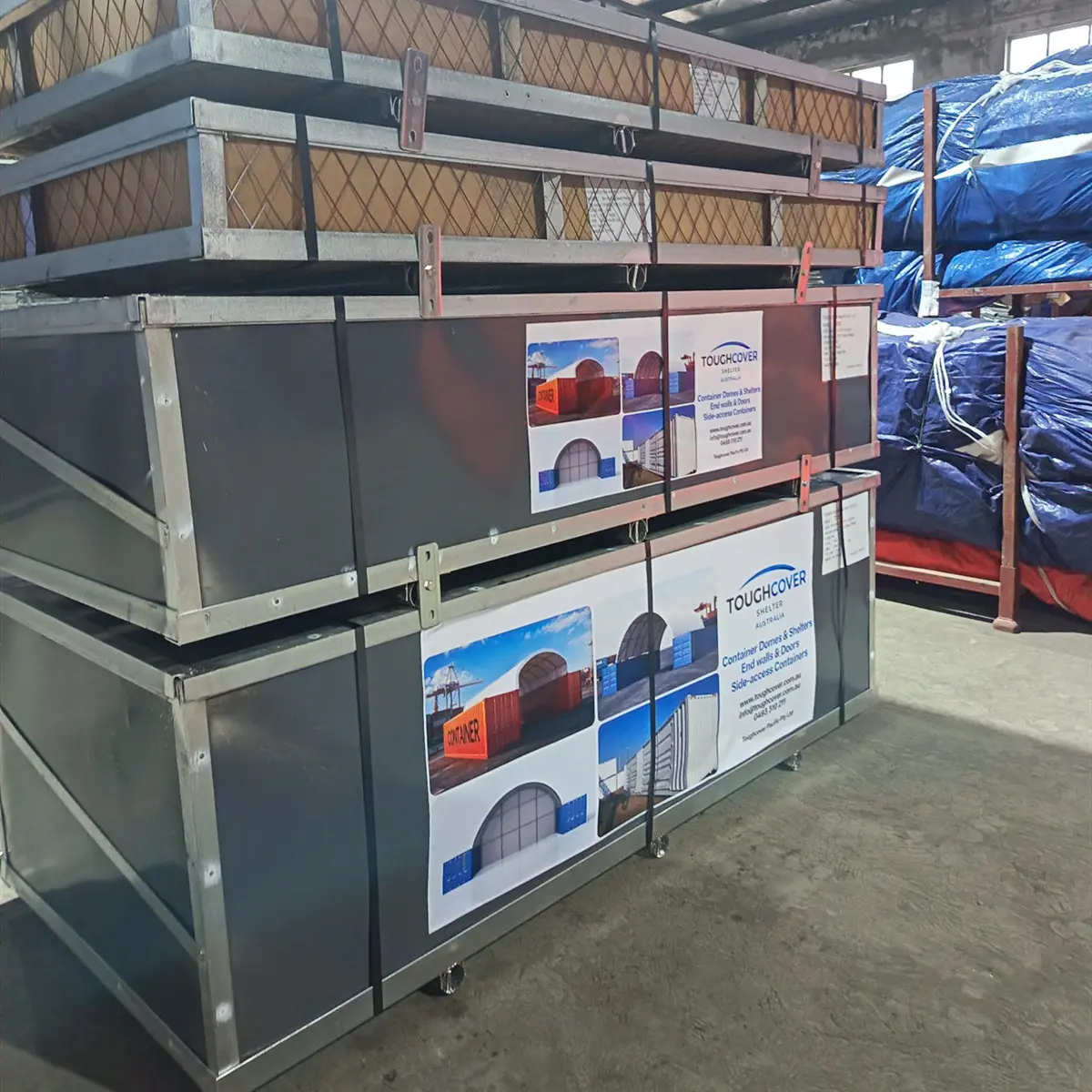
When you buy through a reseller, you're relying on a middleman who may never have seen the factory, doesn't control the packaging process, and can't answer a detailed question about what's in the crate.
We're the manufacturer. We pack the crates. We know what's in them because we put it there.
That's what factory-direct actually means — not just lower prices, but direct accountability for every component that leaves the factory.
Once the crate clears the factory, it ships to our Melbourne warehouse. That's where our Australian stock is held, ready for dispatch within 3–5 business days of payment.
No waiting on international production runs. No guessing on lead times. If it's listed as in stock on our site, it's in the warehouse.
※ Victoria local support & installation →
Our container dome shelters are used across a wide range of Australian sites:
Farms and agricultural properties — hay storage, machinery protection, seasonal cover for equipment across Victoria, NSW, Queensland, and WA.
Construction and civil sites — temporary covered storage and site workshops that can be relocated when the job moves on.
Transport and logistics depots — container yard cover, overnight freight protection, depot storage near major port precincts.
Industrial and mining sites — heavy equipment storage, parts protection, and all-weather operational cover in demanding environments.
Every shelter is certified to AS/NZS 1170.2:2021 wind standards and built for real Australian outdoor conditions — not a showroom.
Browse the full container dome shelter range →
Every kit includes the complete hot-dip galvanised steel frame, PVC cover, base rail, Lock-Clamp container mounting hardware, all bolts and installation accessories, ratchet straps for cover tensioning, two spanner kits, and a detailed installation manual with parts list. Everything required to assemble the shelter is included — no separate hardware runs needed.
Yes. Every shelter ships in a heavy-duty steel-reinforced crate with integrated fork pockets. Components are packed in sequence against a parts list and secured to prevent movement during transport. The crates are designed to handle the rigours of interstate freight to any Australian state.
For the 10m and 12m wide models, a forklift is recommended — these crates weigh 765kg and above. The crates have integrated fork pockets for standard forklift handling. For smaller models, a pallet jack may be sufficient. If you don't have a forklift on site, let us know before dispatch and we can arrange tail-lift delivery.
The Lock-Clamp system uses a bolt-on clamping mechanism to secure the shelter base rail to the top of your shipping containers. No welding equipment is required, no holes are drilled in the container, and the shelter can be removed and relocated without leaving permanent marks on the container.
Most installations are completed in one day with two people using standard spanners — both included in the kit. The no-weld Lock-Clamp system is designed for DIY assembly without specialist trades. Detailed step-by-step instructions are included. For customers in Victoria, professional on-site installation is also available as an optional extra.
Yes. Our container dome shelters are compatible with both standard General Purpose (GP) and High Cube (HC) containers in 20ft and 40ft configurations. Check the individual product pages for clearance height specifications.
If you're considering a container dome shelter for your site, this video is worth two minutes of your time. You'll see exactly how the kit is packed, what's included, and what arrives on your site.
And if you want to subscribe to the channel, we'll be posting installation videos, site jobs, and product walkthroughs as they come.
Follow @ToughCoverAustralia on YouTube →