In Australia, weather is a significant factor in site safety. Whether you are setting up a temporary workshop or a permanent inventory hub, understanding Wind Zones is the most critical step in your purchasing journey.
Choosing a shelter that isn't engineered for your specific region isn't just a poor investment—it's a site hazard. Here is a practical guide to navigating Australian wind standards and ensuring your assets stay protected.
Australia is divided into four main wind regions (A, B, C, and D) based on the frequency and severity of wind events.
● Region A (Most of Australia): Covers the majority of the Australian landmass, including most inland agricultural areas and major cities like Melbourne, Sydney, and Adelaide.
● Region B: Intermediate coastal areas.
● Region C & D: Tropical cyclone-prone coastal regions (Northern Australia and parts of WA).
The Toughcover Focus: Our current range of container domes is specifically engineered and optimized for Wind Region A.
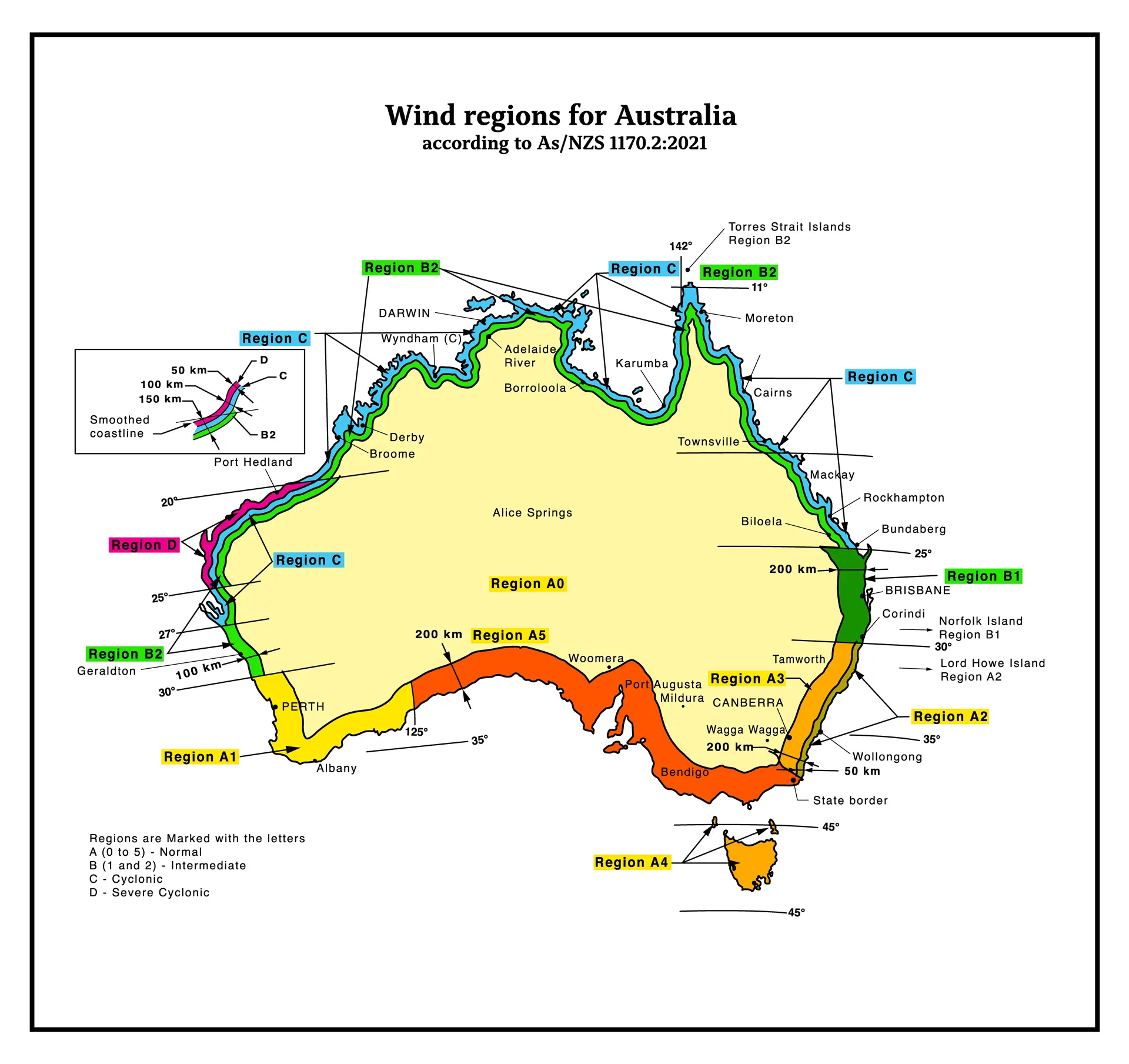
While Region A is considered the "standard" wind zone, don't let the term mislead you. Wind speeds in Region A can still reach significant velocities during storms.
A shelter compliant with AS/NZS 1170.2 for Region A is designed to withstand the typical peak gusts expected in these areas. For most agricultural and industrial sites in Victoria, New South Wales, and Southern WA, a Region A-certified dome provides the perfect balance of structural integrity and cost-efficiency.
Selecting the right dome isn't just about picking a zone on a map. You also need to consider:
Is your site on a flat, open plain (Category 2) or surrounded by other buildings and trees (Category 3)? Open sites face higher wind pressure, meaning your dome's anchoring and frame strength become even more critical.
A dome placed on top of a hill or in a wind tunnel between large structures will face higher loads than one in a sheltered valley.
We believe in engineering that matches reality. For Region A applications, our container shelters are built with:
● Galvanised Steel Framing: Providing the rigidity needed to maintain structural shape under wind pressure.
● 610gsm Heavy-Duty PVC: A tensioned cover that reduces "flapping," which is the primary cause of fabric fatigue in windy conditions.
● Secure Mounting Systems: Whether using weld-on or our innovative no-weld integration, the foundation is what keeps the dome grounded.
We value transparency over a quick sale. If your project is located in Region C or D (the cyclonic regions of the far North or the WA coast), a standard Region A dome—regardless of the brand—is likely not suitable.
For those high-risk zones, specialized cyclonic-rated engineering is required. However, for the vast majority of our clients operating in Australia’s industrial and farming heartlands, our Region A-compliant domes offer the "Tough" protection you need without the unnecessary cost of over-engineering.
Don't buy a shelter based on price alone. Ask for the Engineering Certificate and verify the Wind Region rating.
At Toughcover Pacific, we focus on providing honest, factory-direct solutions that meet the real-world needs of Australian businesses. If you're unsure which zone your site falls into, our Melbourne-based team is here to help you check the maps and choose the right protection.
[View Our Region A Domes] [Talk to a Specialist]